
The salon blowout is one of those things that feels impossibly out of reach at home. Not because the result is actually that complicated — but because getting there traditionally requires two things working simultaneously: a hairdryer in one hand and a round brush in the other. For most people, that coordination doesn't come naturally, and the results range from 'fine' to 'I'll just tie it up'.
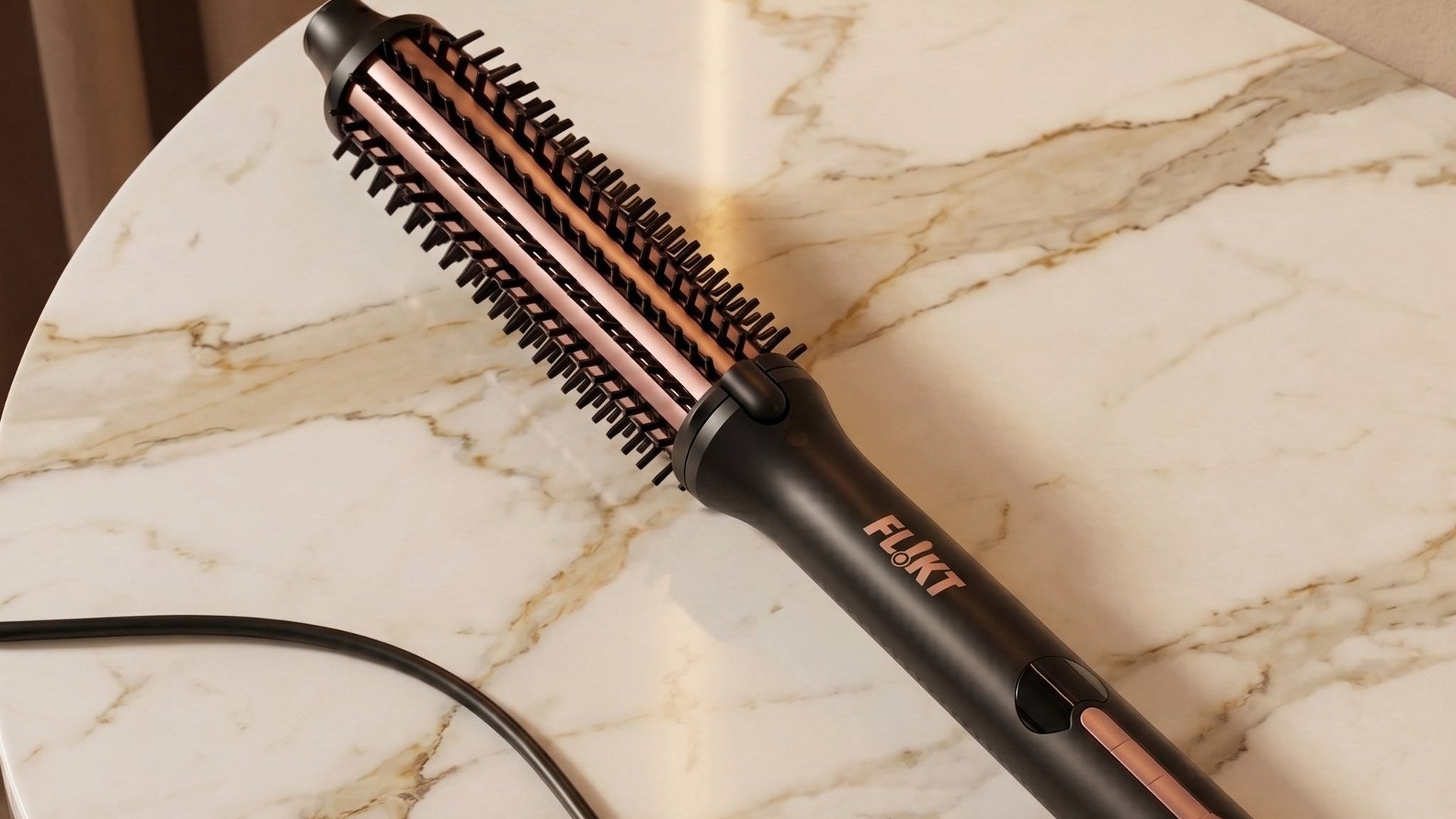
The FL!KT Thermal Hot Brush solves exactly that problem. Reaching 180°C in under 3 minutes, it combines a heated barrel with ceramic glaze technology and 30 million+ negative ions to smooth, shape, and add volume in one motion — on dry hair — without the juggling act or the damage.
This guide covers what a thermal hot brush actually does, how it compares to the classic round brush method, how to use it properly, and which approach gives the best results for different hair types.
What is a thermal hot brush?
A thermal hot brush — sometimes called a heated styling brush or hot air brush — is an electric styling tool that combines a brush barrel with a heat source. Unlike a flat iron, which straightens by clamping hair between two plates, a hot brush styles hair as you brush through it, using the heated barrel to smooth, shape, and add volume in a single gesture.
The heated barrel works similarly to a curling iron or wand, but the bristles give you far more control and make it much easier to use than traditional hot tools. Rather than wrapping hair manually around a bare barrel, you simply brush through each section — the heat does the work, and the bristles ensure even contact and distribution.
Most thermal hot brushes feature ceramic-coated barrels that distribute heat evenly and produce negative ions — these ions help seal the hair cuticle, significantly reducing frizz and adding shine as you style. The result is smoother, more polished hair with noticeably less frizz than you'd typically get from a standard blow dry.
Hot brush vs round brush and blow dryer: the honest comparison
Both approaches can give you a great blowout. But they're not the same — and the right choice depends on your hair type, your skill level, and what you're optimising for.
Thermal Hot Brush |
Round Brush + Blow Dryer |
|
Best used on |
Dry or 80%+ dry hair |
Damp to wet hair |
Ease of use |
Easy — one tool, one hand |
Moderate — requires coordination of two tools |
Speed |
Fast — used on pre-dried hair, touch-ups take 10 minutes |
Slower — drying and styling combined, 20–40 minutes |
Result |
Smooth, polished, voluminous — with controlled curl at ends |
Full blowout with maximum lift and volume — best for very thick hair |
Best for |
Fine to medium hair, quick morning routines, touch-ups |
Thick or very curly hair needing full drying power |
Learning curve |
Low — most people get good results immediately |
Moderate to high — takes practice to coordinate both tools |
The bottom line: a thermal hot brush is the more accessible and time-efficient option for most people — especially anyone with fine to medium hair who wants a polished finish without the coordination challenge of two separate tools. The traditional round brush method gives more drying power for very thick hair, but for the majority of hair types, a hot brush delivers equivalent or better results in significantly less time.
What the FL!KT Thermal Hot Brush can do for your hair
Add volume at the roots
This is the hot brush's strongest suit. By rolling the brush under the hair at the root and lifting upward as you style, you create lasting volume that sits higher and holds longer than what you'd get from blow drying alone. The heat sets the shape into the hair rather than just temporarily pushing it in a direction.
Smooth frizz and seal the cuticle
The ceramic glaze barrel distributes heat evenly across every strand, locking in moisture rather than stripping it. Meanwhile, 30 million+ negative ions work from the inside out — fighting frizz at the source and sealing the cuticle for visibly smoother, shinier hair. The nano ionic technology also helps prevent bacterial growth for cleaner, healthier-looking hair over time.
Create bend and movement at the ends
By curling the brush inward or outward at the ends of each section as you finish a pass, you create that classic blowout 'flick' — the slight curl at the ends that gives hair shape, movement, and a polished rather than flat finish. This is the detail that makes a home blowout look intentional rather than just dried.
Refresh second or third-day hair
You don't need freshly washed hair to use a hot brush. On second or third-day hair that's gone flat, a hot brush is one of the fastest ways to restore volume and polish without a full wash-and-dry session. A light mist of heat protectant and five minutes with the brush can revive a style completely.
Polish an air-dried style
If you air dry your hair and it comes out with frizz or undefined texture, a hot brush used on fully dry hair is a quick finishing step rather than a full styling session. Run it through sections to smooth, add a little shape, and go. It's a genuinely low-effort tool to add to the end of any air-dry routine.
Ready in under 3 minutes
The FL!KT Thermal Hot Brush reaches 180°C in under 3 minutes — fast enough for any morning routine. The 76W PTC fast heater with NTC temperature control maintains consistent heat throughout your session, so the first pass and the last pass deliver the same result.


How to use a thermal hot brush: step by step
Step 1: Start with the right hair — dry or nearly dry
A thermal hot brush works best on hair that's fully dry or at least 80% dry. If your hair is freshly washed, rough dry it first with a hairdryer on medium heat until almost all the moisture is gone, then use the hot brush for the finishing and shaping stage. Using it on very damp hair reduces how long the style holds and increases overall heat exposure.
Step 2: Apply heat protectant
Even on already-dry hair, heat protectant matters. Use a dry-hair formulation — a lightweight spray or fine mist rather than a cream or serum, which can weigh hair down and dull the finish. Apply through the lengths and ends, avoiding the roots if you're after volume.
Step 3: Set the right temperature for your hair type
Fine or colour-treated hair: 80–150°C. Average to thick or treated hair: 170–190°C. Thick or textured hair: 190–220°C. Always start at the lower end and increase only if needed. A hot brush is effective at lower temperatures than a flat iron because the bristles create more even contact with the hair — you don't need to compensate with excessive heat.
Step 4: Section your hair and work from underneath
Clip your hair up and work in sections from the bottom layers upward. For a blowout finish, use sections roughly 1–1.5 inches wide. Narrower sections give more defined results; wider sections give a softer, more natural finish. Clip each completed section out of the way as you go so you're working with clean, separate pieces of hair.
Step 5: Roll, lift, and draw down
Place the hot brush at the root of each section and roll it under the hair, lifting slightly as you do. Then slowly draw it down through the length of the section to the ends. For volume, keep a slight upward tension as you pull down. For a smooth, straight finish, keep the brush parallel to the hair. For the classic blowout curl, as you reach the ends of the section, rotate the brush inward (toward your face) and hold for 5–8 seconds before releasing. This creates that distinctive flick at the ends.
Step 6: Let each section cool before touching
Exactly as with any heated styling tool: give each section 30–60 seconds to cool before running your fingers through it. This sets the volume and shape into the hair. If your hot brush has a cool shot setting, use it on each section after styling to actively lock the shape in — this is one of the most effective ways to make a blowout last through the day.
Step 7: Finish with a lightweight setting spray
Once your whole head is done, a light mist of flexible-hold hairspray or setting spray adds longevity without stiffness. Avoid heavy creams or oils at this stage — they flatten volume. If you want extra lift, flip your head upside down and shake gently before spraying for a more voluminous, lived-in finish.
Hot brush tips by hair type
Fine hair
Use the lowest heat setting and focus on lifting at the roots rather than running the brush through lengths multiple times. Fine hair responds quickly to heat and holds styles well — over-processing is the main risk. A lightweight root-lifting spray applied before styling can dramatically increase how long the volume holds. Avoid heavy products at any stage.
Medium / wavy hair
The most versatile hair type for a hot brush. You can lean into the natural texture or smooth it out completely depending on your technique. For a smooth blowout, draw the brush slowly through from root to tip with consistent downward tension. To enhance natural movement, work the brush through more loosely and let the wave pattern influence the result.
Thick / coarse hair
Use a higher heat setting and work in smaller sections than feels necessary. Thick hair needs the heat to penetrate the full section, and rushing with large sections gives uneven results. For this hair type, rough drying with a dedicated blow dryer first — getting hair to 80–90% dry before picking up the hot brush — gives significantly better results and reduces total styling time.
Curly / coily hair
A thermal hot brush used on fully dried curly hair gives a smooth, stretched result with natural volume — closer to a blowout than a flat iron finish. Work in small, carefully separated sections. The bristles help detangle as you go, which makes the process more manageable than flat ironing the same result would be.
Common mistakes — and how to fix them
- Using it on too-wet hair. A hot brush on damp hair won't hold the style, and you'll end up with flat, frizzy results. Always get hair to at least 80% dry first.
- Moving too fast. Rushing through each section means the heat doesn't properly set the shape. Slow, deliberate passes — especially at the root and end stages — make a significant difference in the result.
- Sections that are too wide. This is the most common beginner mistake. Wide sections mean uneven heat distribution and less defined results. 1–1.5 inch sections take longer but the difference in outcome is worth it.
- Skipping the cool-down step. The shape is set as the hair cools, not when it's hot. Touching or moving the hair while it's still warm from the brush loses most of the volume and shape you just created.
- Using heavy products before styling. Creams, oils, and serums applied before using a hot brush weigh hair down and create a barrier that reduces the effectiveness of the heat. Save these for after, if needed.
- Over-styling the same sections. Two or three passes per section is the maximum. Repeatedly running the brush through the same hair increases heat damage without improving the result.
Frequently asked questions
Can I use a hot brush on wet hair?
A thermal hot brush is designed for dry or nearly-dry hair — ideally 80% dry at minimum. Using it on very damp hair gives poor results (the style won't hold) and exposes wet, vulnerable hair to direct heat. If your hair is freshly washed, rough dry with a hairdryer first, then use the hot brush for the finishing and shaping stage.
Is a hot brush better than a flat iron for volume?
Yes — a flat iron is designed to straighten and smooth, not to add volume. A thermal hot brush is specifically designed to create lift at the root and shape at the ends, giving you a blowout-style volume that a flat iron can't replicate. If you want straight and sleek, use a flat iron. If you want polished and voluminous, a hot brush is the right tool.
How long does a hot brush blowout last?
Typically 2–3 days with the right technique and products. The key factors are letting each section cool completely before touching, finishing with a lightweight setting spray, and sleeping on a silk pillowcase or tying hair loosely to preserve the shape overnight. On day two or three, a quick pass with the hot brush on flat areas refreshes the style in minutes.
What temperature should I use on a hot brush?
Use 80–150°C for fine or easy-to-style hair, 150–190°C for average to thick or treated hair, and 190–220°C for thick or textured hair
Always start at the lower end of the range for your hair type and increase only if the style isn't holding. A hot brush is effective at lower temperatures than a flat iron because the bristles create more even, consistent contact.
Can I use a hot brush on fine hair?
Yes — a thermal hot brush is one of the best tools for fine hair specifically. Fine hair holds heat styles easily and responds quickly to the heat, which means you get great volume at a lower temperature with fewer passes. Use the lowest heat setting, focus on root lift, and avoid heavy products before styling. The result is voluminous, polished hair without the weight.
How is a hot brush different from a hot air brush?
A thermal hot brush (like the FL!KT) uses a heated barrel with bristles to style dry or nearly-dry hair — the heat comes from the barrel itself, similar to a curling iron. A hot air brush combines a hairdryer with a brush barrel, blowing heated air through the bristles to dry and style simultaneously from damp hair. Both create blowout-style results but are used at different stages of your routine and suit different hair types.
Do I still need a hairdryer if I have a hot brush?
For most routines, yes — the hot brush works best as a finishing and shaping tool on already-dry hair, not as a primary drying tool. Use a hairdryer to get your hair 80–90% dry after washing, then switch to the hot brush for the final styling stage. The exception is if your hair is naturally fine and dries quickly, in which case you may be able to go straight to the hot brush on lightly damp hair.
How often can I use a thermal hot brush?
Daily use is generally fine if you're using heat protectant and the appropriate temperature for your hair type. Because hot brushes operate at moderate temperatures compared to flat irons and create less mechanical stress on the hair (no clamping or tight wrapping), they tend to be gentler in regular use. That said, giving your hair occasional days off from heat styling always benefits long-term hair health.
How quickly does it heat up?
The FL!KT Thermal Hot Brush reaches 180°C in under 3 minutes — fast enough to fit into any morning routine without standing around waiting
Does it switch off automatically?
Yes — the FL!KT Thermal Hot Brush automatically powers down after 30 minutes of inactivity, giving you complete peace of mind.
Can I use it abroad?
Yes — the FL!KT Thermal Hot Brush is compatible with 100–240V power supplies, making it suitable for use in any country worldwide.
Share:
Wet-to-Dry Hair Straighteners: Everything You Need to Know
LED Face Masks: The Complete Guide to At-Home Light Therapy